
Examples
What went in. What came back.
Every photograph on this page on the left is one somebody took on a phone, in a car park, in whatever light there was. Every one on the right is what Lotsmith handed back. Same vehicle, same day, different photograph. Look at the wheels, the badges, and the scuffs: those are the parts that are supposed to survive, and they are the parts worth checking.
These are example vehicles, not customer case studies. Lotsmith is new and has no results to report yet, so this page reports none.
Ram 1500
A truck photographed at dusk, on a full lot.
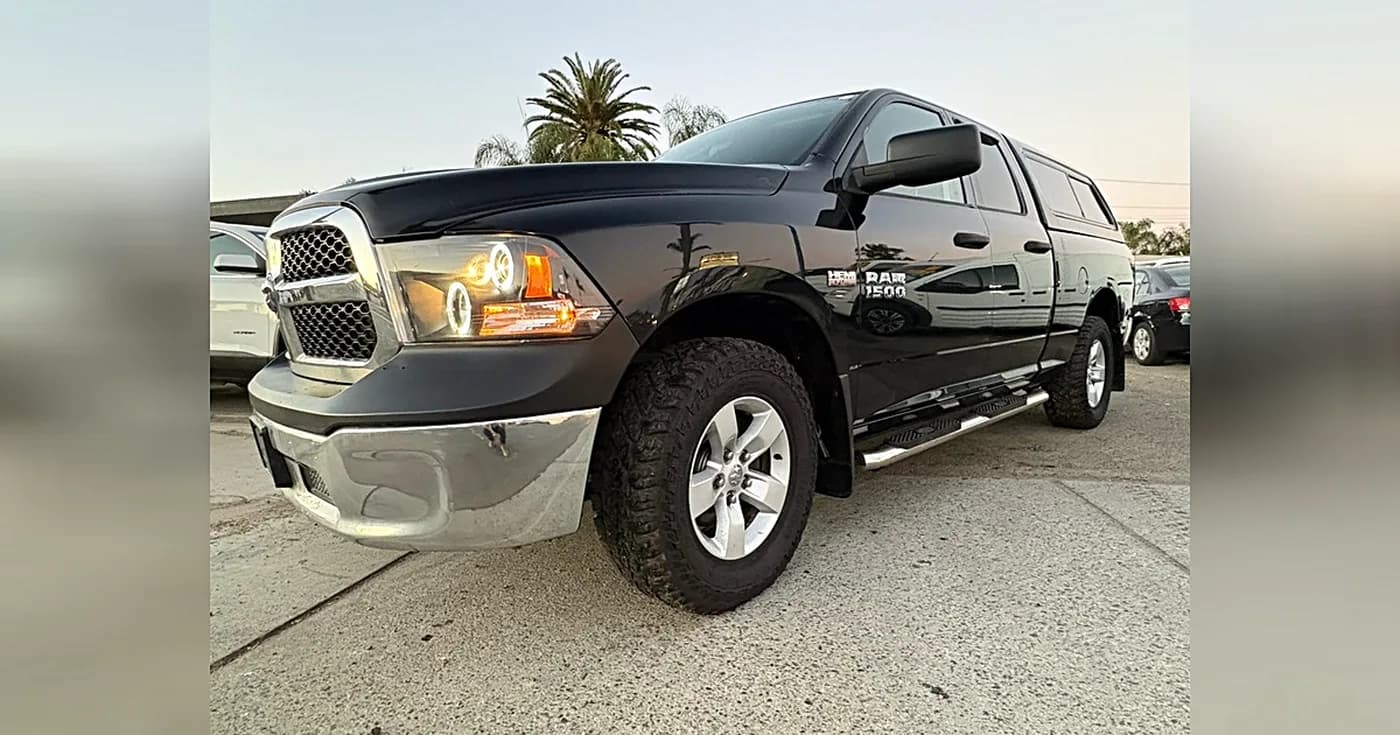
Low sun behind the truck, so the near side falls into shadow and the chrome goes orange. A white sedan crowding the left edge, a dark sedan on the right, a palm tree growing out of the roofline, and a lot fence running through the middle of the frame. The camera is close and low, which stretches the front bumper and shortens the bed.
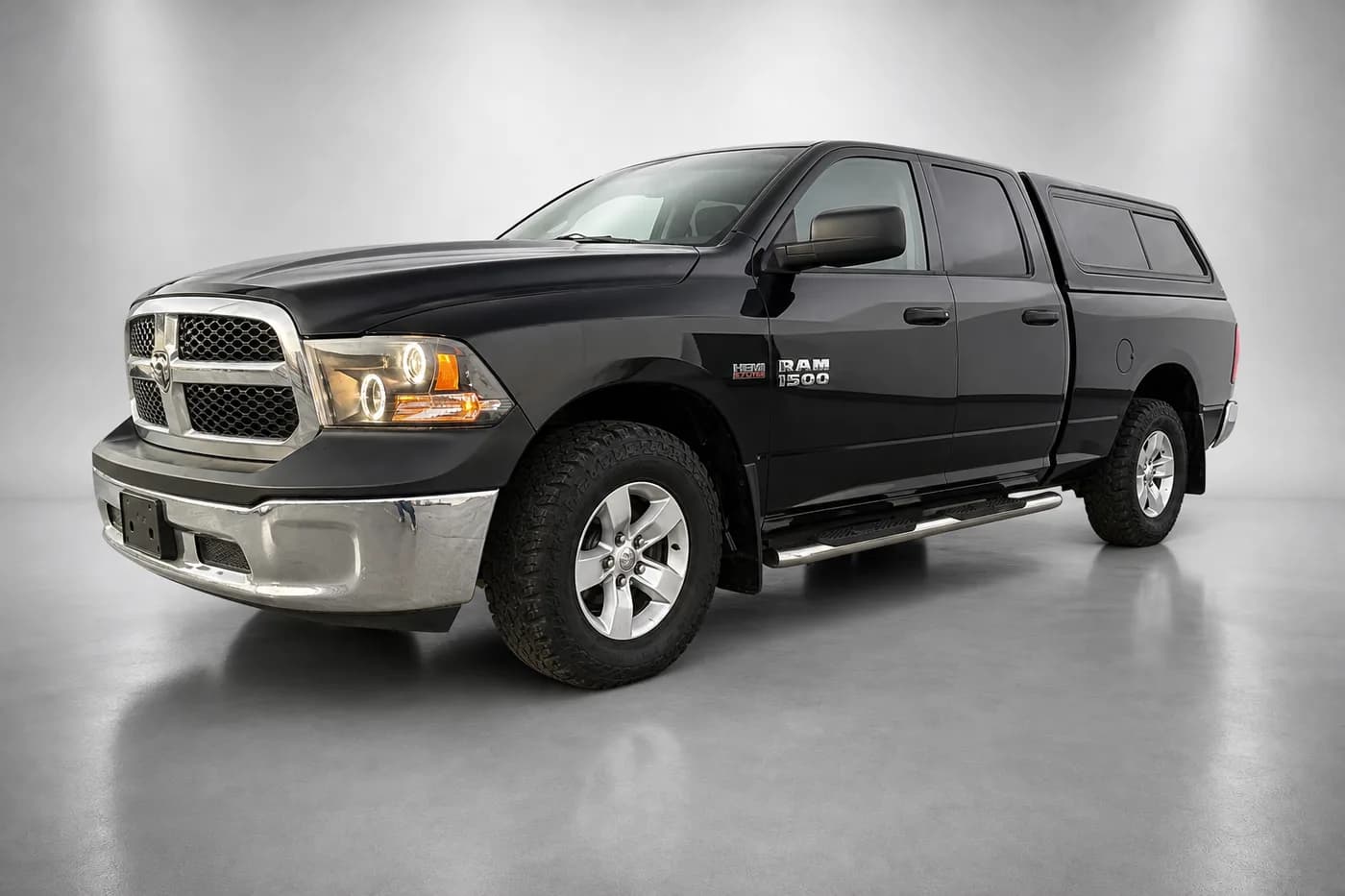
The truck stands in the seamless grey studio, lit evenly from both sides, photographed level from the front three quarter. Nothing is competing with it for the frame, and the paint reads as black rather than as whatever the sunset made it.
What did not change
The list below is the whole argument. A buyer drives out to see the vehicle in the photograph, and every item here is one they would notice was missing.
- The camper shell, including its tinted side glass
- The aftermarket halo headlights, still lit
- The scuffs and road grime on the chrome front bumper
- The chrome running boards and the step behind the front wheel
- The factory alloy wheels and the all terrain tyres
- The HEMI 5.7 and RAM 1500 badges, in their places
- The empty front plate bracket, still empty
Honda Odyssey
A minivan photographed at noon, under a carport.
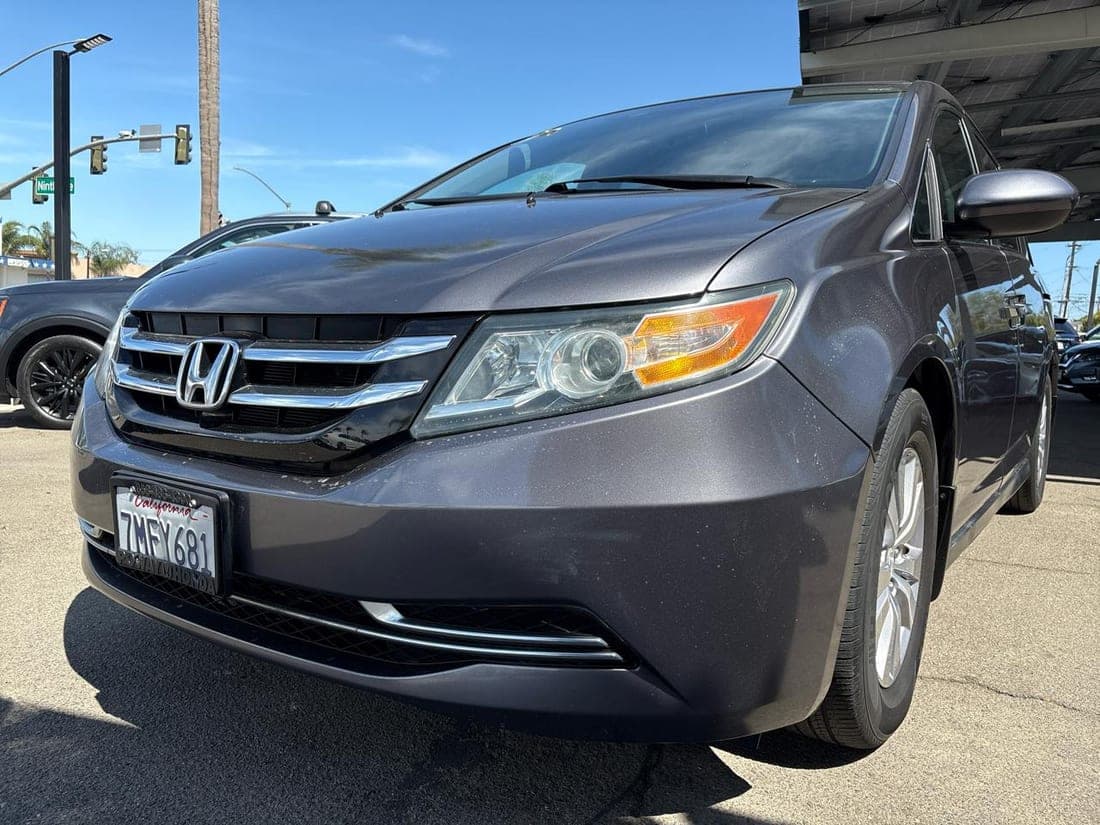
Hard overhead sun, half the van under a carport roof and half of it out in the light, so the body splits into a bright half and a dark half. Traffic signals, a street sign, power lines, palm trees, and two other cars in frame. Shot from about knee height and close enough that the front bumper dominates and the rear of the van tapers away.
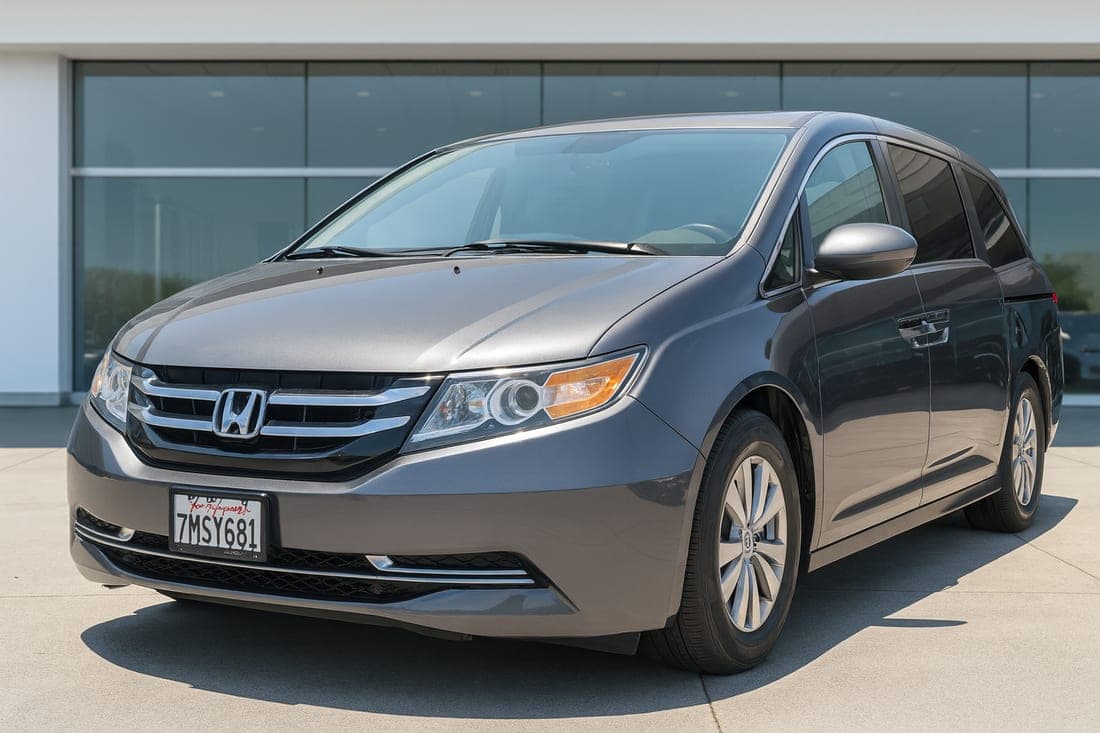
Even light across the whole body, clean concrete underneath, and the van photographed level from the front three quarter so both the front and the flank are readable. The metallic flake in the grey paint shows, which it cannot do in direct midday sun.
What did not change
The list below is the whole argument. A buyer drives out to see the vehicle in the photograph, and every item here is one they would notice was missing.
- The grey metallic paint and its flake
- The factory alloy wheel design, all five spokes
- The privacy glass on the rear doors
- The chrome grille bars and the Honda badge
- The body coloured door handles and mirror caps
- The trim level's specific headlight cluster
The part people notice
The camera moved. The vehicle did not.
Hold the two frames side by side and the framing is different every time. The vehicle sits at a different size, from a slightly different angle, at a different distance. That is not a rendering mistake and it is not us hiding a crop.
When you choose a studio, Lotsmith does not cut the vehicle out and paste it onto a backdrop. Cut and paste is what makes a photograph look fake: the edges go crisp, the shadow points the wrong way, and the light on the car does not match the room it is standing in. Instead the vehicle is re-photographed in that room, which means a new camera position, and that is why the frame changes.
What is held constant is the vehicle. Paint and its finish, wheels, tyres, ride height, grille, lights, mirrors, glass and its tint, body lines, chrome, trim, badges, accessories, and any visible damage. A separate review step in the pipeline does nothing but check that against the original before the photo is allowed through.
Leave the studio switched off and none of this applies: the vehicle stays exactly where you photographed it, at the exact angle you shot it, and only the light and the mess around it get fixed.
The rest of the folder
A listing is not just the pictures.
The same upload produces a vertical video cut from those photographs and the written listing to go under them. Both are in the zip, and neither costs extra.
listing.txt
This Frontier won't sit long.
Crew cab, clean inside and out, and ready to work. Priced to move this week. Come drive it before it is gone.
The video is cut from the photographs you already sent, so it needs nothing from you beyond the upload. It comes out at 1080 by 1920, which is the shape Facebook Marketplace, Reels, and Shorts all want, and it plays without sound because that is how it will be watched.
The description is written from the vehicle rather than from a template. It states what the vehicle is and what condition it is in, and it does not invent history, service records, or a reason the owner is selling. If you left the vehicle details blank, you get the photographs and the video and no description, because there is nothing truthful to write one from.
Whose car is it
One vehicle or a hundred, the output is the same.
Selling one car
One photo free with no card, and after that eight dollars buys twenty photos, which is a whole car for most people. Nothing to subscribe to and nothing to cancel.
Running a lot
Thirty cents a photo at the 500 pack, against $45 to $120 a vehicle for outsourced editing, with the video and the listing included. Credits do not expire, so a slow month costs nothing.
Your vehicle, not ours
The only example that matters is your own.
Send the photos you already took of one vehicle and hold what comes back against what you were about to post. The first one is free, there is no card, and you keep the files either way.